
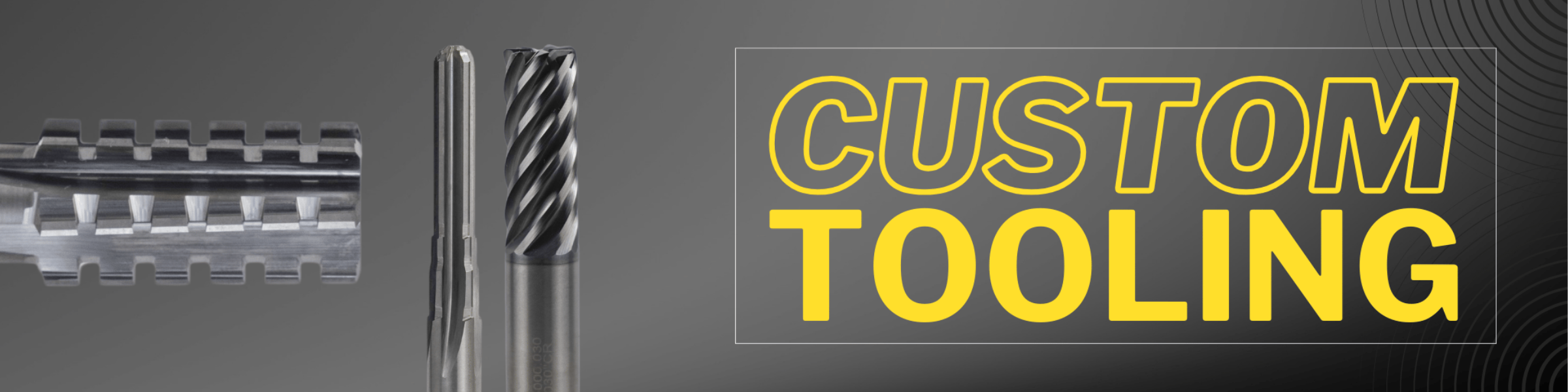
CGS Tool’s Custom Tooling Program: Designed for Your Exact Needs
When standard tools don’t fit the job, CGS Tool’s Custom Tooling Program delivers. Our in-house engineering team specializes in designing and manufacturing solid carbide cutting tools tailored to your unique specifications.
How the Custom Tooling Program Works
- Submit Your Application Needs
Provide detailed requirements, part drawings, or performance goals.
You can send this information to CGS TOOL'S SALES INBOX - Engineering Collaboration
Our experts review your application and design a tool that optimizes performance, tool life, and cost efficiency. - Precision Manufacturing
Every custom tool is produced with strict quality control at our U.S.-based facility, ensuring consistency and reliability. - Performance You Can Count On
Custom solutions are tested and fine-tuned to provide maximum results in your machining environment.
Why CGS Tool is the Leader in Custom Tooling
Experience You Can Trust: Decades of expertise in solid carbide cutting tool manufacturing.
Tailored Solutions: From general-purpose end mills to high-performance carbide tools, every design is optimized for your needs.
Cost-Effective Innovation: Reduce machining time, extend tool life, and lower your cost per part with a solution made just for you.
Made in America Quality: All custom tools are manufactured in the USA with superior craftsmanship and fast lead times.
The Advantage for Your Operation
With CGS Tool’s Custom Tooling Program, you gain:
Enhanced productivity through precision-engineered design
Lower overall tooling costs with longer-lasting carbide solutions
A direct partner invested in your success, not just a supplier
When your operation requires more than an off-the-shelf solution, trust CGS Tool to engineer the difference.
When Standard Cutters Stop Solving the Job
A shop does not usually start looking at custom tools because it wants something unusual. It starts looking because a standard cutter is no longer doing the job cleanly enough, consistently enough, or economically enough. That is where custom cutting tools become a practical decision.
When tolerances tighten, feature geometry gets more demanding, or tool life keeps falling short, a purpose-built approach often creates a clearer path than trying to force a catalog option into work it was never meant to handle. CGS Tool positions its Custom Tooling Program around exactly that moment, offering an in-house engineering process for solid carbide cutting tools built to the buyer’s specifications.
The Point Where Standard Tooling Starts Costing More
What looks like a workable stock cutter on paper can become expensive once real production begins. The problem is not always obvious at first. It may show up as unstable finish quality, shorter edge life, repeated process adjustments, or a cycle that never feels fully under control. At that stage, the issue is rarely just about one diameter or one coating. It is about fit between the cutter and the actual demands of the operation.
That is why a custom route makes sense when the process keeps forcing compromise. A better answer often comes from changing the tool around the job rather than changing the job around the tool.
What a Strong Request Should Include
A better result usually starts with better input. CGS Tool’s process specifically asks buyers to submit detailed requirements, part drawings, or performance goals before the engineering review begins. That matters because the more clearly the job is defined, the easier it becomes to shape a cutter around real production needs instead of assumptions.
Before moving forward, it helps to prepare details such as:
- Part material and cutting conditions.
- Dimensions, drawings, or feature requirements.
- Geometry concerns tied to the current setup.
- Coating preferences, if already known.
- Tool life or finish problems that need to be improved.
- Performance targets such as cycle time, consistency, or cost per part.
That kind of preparation does not just make the conversation easier. It makes the final direction more useful.
Why the Process Matters as Much as the Geometry
The strongest custom tooling services are not built on guesswork. They depend on a process that moves logically from problem to design to production. CGS Tool describes that process in four stages: submission of application needs, engineering collaboration, precision manufacturing, and then a performance-focused result that is fine-tuned for the machining environment.
That sequence matters because geometry alone is not enough. A design only becomes valuable when it is supported by engineering judgment, manufacturing control, and consistent follow-through. In real production, reliability comes from how those pieces work together.
Where Purpose-Built Carbide Work Creates Better Value
A shop choosing custom carbide tooling is usually not chasing novelty. It is trying to create a more stable and more economical cutting process. That may mean extending tool life, improving repeatability, reducing machining time, or lowering the overall cost per part. CGS Tool highlights all of those outcomes in its custom-tooling messaging and ties them to its in-house engineering, strict quality control, and U.S.-based manufacturing process.
That value becomes easier to see in areas like:
- Tighter feature control where standard geometry keeps falling short.
- Improved consistency across longer production runs.
- Better alignment between cutter design and part demands.
- Reduced compromise in difficult or highly specific applications.
- Stronger long-term return from custom carbide tools built around the work itself.
In some operations, that may also involve custom tool grinding or custom form tools when the feature profile or cutting demand goes beyond a standard shape.
Why the Right Manufacturing Partner Still Matters
Once a shop decides to move toward a custom solution, the next question is not only what should be designed, but who should build it. CGS Tool presents that case through decades of expertise in solid carbide cutting tool manufacturing, U.S.-made production, fast lead times, strict quality control, and a direct partnership approach rather than a simple supplier relationship. It also frames its program around collaboration, not just submission, which is important when the job requires judgment as much as production capability.
For buyers dealing with work that no longer fits an off-the-shelf answer, the value of a custom program is not in sounding specialized. It is in solving the problem more cleanly. That is where CGS Tool’s approach becomes relevant: not as a broad sales claim, but as a structured route for machining teams that need better alignment between cutter design and real production demands.
Frequently Asked Questions