
In the growing, volatile economy, marked by fluctuating costs, material shortages and unpredictable shipping delays, manufacturing operations must hold budgets and look for reliable sourcing alternatives. The metal-cutting tools, specifically made from carbide alloys, are often overlooked as a cost-saving opportunity.
Although, despite being treated as consumables in different facilities, both standard and specialised carbide cutting tools can be effectively reconditioned. Using certain regrinding and recoating processes, the CGS tool professionally restores carbide tools, extending their service life and helping lower costs. In this post, we will understand more about regrinding carbide cutting tools.
Regrinding in real machining work
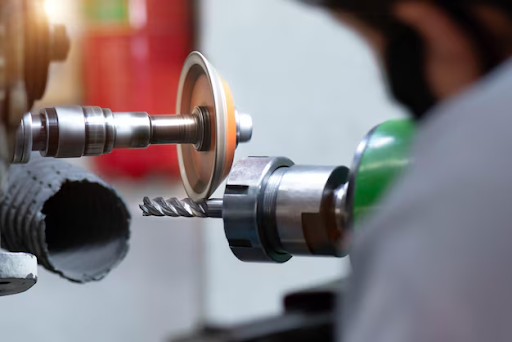
The purpose of regrinding in real machining is to sharpen worn industrial cutting tools, such as drills and end mills, or recondition machine components, such as ways or spindles, to their original geometry and accuracy. In short, it allows the tool life to be extended by 15–20 times, at the same time cutting costs by 5–6 mins per tool. It is a major practice for maintaining precision, especially in CNC production, where tool wear can affect part accuracy.
Key components of Real Machining Regrinding
Here is the list of main aspects -
- Cost Effectiveness: It is economical, especially when done in-house for at least 3 hours a day.
- Spindle Maintenance: Regrinding the spindle taper on a CNC machine, even while on the machine, is a prominent, high-precision maintenance step to fix damaged tapers.
- Tool Reconditioning: Sometimes reconditioning involves restoring end mills, drills and reamers to their original, optimal cutting geometry that involves tool resharpening, cutting edges and relief angles.
- Machine Component Refurbishing: For major parts of the equipment, such as lathes, ways can be reground to retain accuracy.
- In-house vs. Outsourcing: There are several shops that are moving to in-house, high-precision CNC tool grinders for complete control over tool geometry and to support inclined manufacturing and just-in-time production.
Preference for regrinding over new tools
Regrinding worn, premium-quality carbide cutting tools is a top-notch strategy to buying new, typically costing less than 40% of a fresh tool while restoring 85 -95% of original performance. It offers crucial cost savings (upto 60% ), lowers raw material waste and allows tools to be reused twice or thrice times.
Reasons Why Regrinding is Preferred
- Performance Recovery - State-of-the-art reconditioning keeps the original cutting geometry of the tool and adds new coatings, just like a brand new tool.
- Greener - It costs less to reground a tool than it does to buy a new tool, usually costing 30 to 40 per cent less, therefore saving a significant amount of overall cost for a tool.
- Longer Tool Life - High-quality carbide tools can be reground at least two to three times, so they have the maximum ROI.
- Higher Productivity - Properly maintained/reground tools reduce machine downtime and produce consistently high-quality parts.
Extending tool life through regrinding
The life of a cutting tool can be extended by regrinding its cutting edge. This means that you can take an existing carbide cutting tool that has become badly worn down and have it restored to its original specifications and performance level, plus have a new coating applied. The cost savings associated with regrinding can be as much as 40% or more compared to buying new tools. The cost savings and environmentally friendly aspect of regrinding make this a great option for manufacturers. Additionally, regrinding multiple times (typically 2-3 times) will allow you to reuse your carbide end mills and maintain an 85%-95% performance level compared to when they were new.
Cost savings and long-term value
Grinding tools/carbide provides significant savings, around 30 - 40% lower than a new tool, but often provides 2, 3, or 4 times longer lasting than new; this results in up to 70% overall project cost savings. Consistent material usage results in long-term value since it reduces raw material waste by up to 80%; in addition, it is able to achieve very high performance levels; therefore, this approach is a very cost-effective and sustainable strategy for high-volume production manufacturers.
Its long-term value includes :
- Lifecycle Savings
- Lowers unit cost
- Reduced consumption
- Decreased inventory Costs
Suitable and unsuitable cases for regrinding
Regrinding is an economical practice to restore tool life or recycle plastic materials. It is basically ideal for high - cost, high-volume or simple geometry items; however, unsuitable when significant damage, complicated coating removal or material degradation is present.
Suitable Cases for Regriding
- Tool Reconditioning ( Cutting Tools)
- Simple Geometry Tools - Reamers, simple drills, and end mills are ideal for reshaping.
- Solid carbide end mills Tools - Specifically made for several regrinds such as force X/M drills.
- High -Value Tools: Carbide end mills and long drills are ideal because they showcase a significant capital investment.
- Moderate Wear: Tools used for around 80% of their life are excellent candidates. Above this, excessive wear enhances costs.
- Coated Tools: Tools that can be successfully stripped and recoated with materials such as TiAIN.
- Plastic Manufacturing
- Injection Manufacturing Scrap: Runners, sprues and rejected parts can be ground and added to virgin materials, typically at a 20% ratio, provided they are clean and not contaminated.
- Thermoplastic: Materials that can be remelted without certain degradation, such as PET, PE or PP.
- Mining /Processing
- Concentrates/middlings: For copper flotation plants, regarding is perfect for finer liberation of minerals in the concentrate.
Key checks before reusing tools
Before reusing tools, create a visual inspection for structural damage such as cracks, broken handles; test electrical components for frayed grounding/ cords, which ensures safety guards are in place, look for proper lubrication, and verify that moving parts function seamlessly. Clean off debris, rust or oil to ensure secure and efficient operations.
Key Points Before Reusing Tools
- Metal Parts: Check for corrosion, rust or mushroomed heads on chisels and punches.
- Metal Parts: Inspect chisels and punches for mushroomed heads, rust and corrosion.
- Blades & Bits: Make sure cutting tools are sharp, clean, and cracked.
- Structural Integrity: Examine handles for splits, splinters or cracks. Make sure that hammers and axes fit tightly.
- Power & Cords: Analyse cords for fraying or exposed wires. Do not break plugs – use double-insulated or grounded tools.
- Guards & Safety: Check all guards are in place & working.
- Functionality: Test operation for unusual noise or rattling.
Conclusion
Correct grinding is crucial in order to ensure performance and life in carbide milling tools. Prying in the correct way using diamond grinding and CNC grinding, moreover, ensuring the following good practices, will enhance the efficiency at minimal cost with high-quality machining.
At CGS Tool, we offer industry -leading tailored solutions in tooling and precision-ground CNC machining tools for obtaining the best results.