
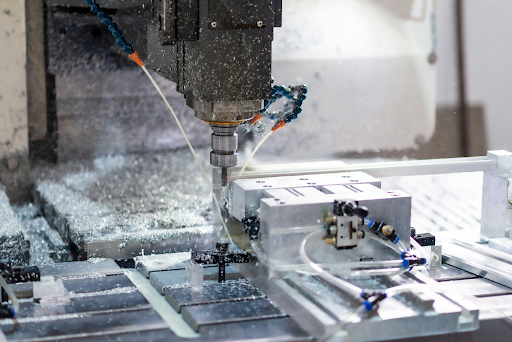
Selecting the industrial CNC machining is one of the prominent factors that ensures frequent performance, cost control and part quality. The right cutting tool can particularly enhance material removal rates, lower scrap, enhance machine uptime and extend surface finish. However, practising the wrong tool can lead to premature wear, chatter, poor tolerances and costly downtime.
Cutting tools, including milling cutters, are basically defined by two crucial properties: their material and any coating applied to them. These elements are carefully selected based on the machine’s rigidity and power, the material being eliminated, and the requirements of the job.
Understanding end mills simply and practically
End mills are rotating cutting tools that are versatile and used in CNC milling to create flat surfaces, pockets and complex contours by eliminating materials. They are different from drill bits designed for sideways (radial) cutting, rather than just plunging (axial). The important factors involve material (carbide for metal, HSS for soft materials), flute count and tip shape.
Why carbide end mills are used in most CNC machining jobs
A carbide end mill is defined by a high - performance cutting tool utilised in CNC cutting tools and milling cutters. It moulds to shape, slot profile and finish workpieces with outstanding accuracy. They are made from solid carbide end mills, which are perfect for machining general steels, stainless steel, and composites, even under high-speed and high - heat conditions.
These tools are significant in different industries such as automotive, aerospace and precision engineering, where fine finishes and long tool life are crucial.
Choosing the right tool for better speed and surface finish
The main problems to consider when selecting a cutting tool include tool material, tool operation type, machine capability, production requirement and cutting tool technology. The material is often the most important factor as the properties of the tools should differ according to the material to be worked, for example between aluminium, steel, hard materials, plastics and composites. The type of operation is another factor to consider, as roughing, finishing and high precision work require different characteristics of tools.
The type of CNC machining tools that work well are influenced by machine limitations, such as spindle speed, rigidity, and tool holding systems. Another important factor is production volume because the economy for low volume and high volume manufacturing are different. The use of other cutting tools, including coating technology and modern materials, also contributes to a better cutting performance, durability, and general cutting efficiency.
Reducing tool breakage with small but important changes
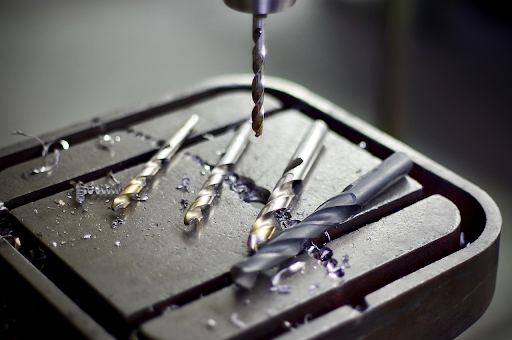
Tool breakage is among the most disruptive events in any machine operations. Because of this, there will be machine downtime, scrapped parts, poor quality of surface finish, and even breakage of expensive equipment takes place.
Here are a few strategies to reduce the tool breakage:
- Optimize cutting parameters
- Implement Tool monitoring systems
- Use high-quality tool holders
- Regular tool inspection and replacement
- Use the right tool material and coating
- Enhance workholding and machine Setup
- Apply the proper coolant strategy
- Use ramp and helical entry and strategies
- Avoid interrupted cuts with fragile tools.
Avoiding tool breaking is all about implementing sound engineering practices, opting for the right tools and parameters and integrating digital solutions such as monitoring systems.
Carbide vs HSS tools and what really matters in real work
Carbide milling tools are known for high -speed, automated, and rigid production, which offers elevated wear resistance, faster cutting speeds and longer tool life. HSS, which is also renamed as high-speed steel tools, are tougher, more affordable and easier to resharpen. It makes them better for manual machines, lower -budget projects or situations requiring high shock resistance.
Key differences between Carbide and HSS tools
Carbide tool:
- It is best for high-volume production, CNC machining and cutting hard materials.
- It is extremely difficult (retains hardness up to 900 degrees that lasts up to 5 times longer than HSS.
- It provides better surface finishes and allows for higher speeds.
- However, it is quite expensive, brittle and harder to resharpen.
- It can be best used on strong machines to avoid breaking the tool.
HSS tool:
- It is best used for manual lathes, smaller shops and interrupted cuts.
- It is more cost-effective, strong and shock-resistant, and easy to sharpen on a standard bench grinder.
- However, it wears faster than carbide and softens at lower temperatures.
- It is more forgiving than carbide, making it suitable for less experienced users.
Looking beyond new tools, the role of regrinding in tool life
Regrinding basically pushes tool life via restoring cutting edges to original, or near original, specifications. It offers 85 - 95% of fresh tool performance while cutting costs by 30 - 40% per use.
The Significance of Regrinding in Tool Life Management
- Restoration of Performance: High quality regrinding not only sharpens tools, but restores the original geometry and provides a specially coated surface. It also ensures a uniformity of performance and part accuracy.
- Better Life Expectancy: In general, some carbide end mills can be reground three or more times and can save up to 60 to 70 percent of the total cost of the end mill.
- Quantity / Consistency: By controlling in-house or specialised regrinding via platforms like ANCA, there is a high measure of repeatability and precision and, in many cases, better control over production.
- Optimal Timing: Regrinding can be implemented on a set schedule, rather than waiting for catastrophic failure. It ensures the tool does not suffer irreversible, serious damage, which makes it unsuitable for reconditioning.
When standard tools are not enough, and custom solutions help
Dynamic processes, high precision needs and strict compliance needs are common cases where standard tools can't adequately support a business. This is evident when teams spend more time than they do working with the data resuming it across various systems or when a custom workflow is pushed into a standard tool, thus stifling innovation. When multiple SaaS subscriptions, premium plans, and integrations add up to more expensive than one custom application, there's an increase in costs. However, in other manufacturing industries like aerospace or medical devices, standard tools might not be able to achieve the required tolerances or complex geometries, making specialised industrial cutting tools more appropriate. Then there's scalability, particularly when tools crash during peak times, don't support more users or drag down the growth of a business.
Why choosing the right tool supplier matters in the long run
Opting for the right tool supplier is a crucial long-term investment that directly influences profitability, product quality and operational efficiency. A trustworthy partner decreases downtime via frequent quality and support. It lowers total costs by minimising repairs and premature replacements.
The different benefits of the right supplier for the long run are like it has crucial cost savings, operational efficiency, quality assurances & consistency and technical support and services.
Conclusion
Selecting the right tools for CNC machining processes requires systematic consideration. You can consider opting for tools; you need to understand the parts, materials and the desired surface finish. Whereas, optimising the milling cutting parameters and tool paths. Selecting drilling tools directly impacts the overall quality and efficiency. And regardless of the types of tools, a systematic adjustment of geometric parameters is significant.
Implementing these principles and employing high-performance solutions from CGS Tool can lead to better work performance, longer tool life and parts that satisfy design accuracy and quality expectations. You'll slowly develop your CNC machining expertise through regular experimentation and tuning of your work.