
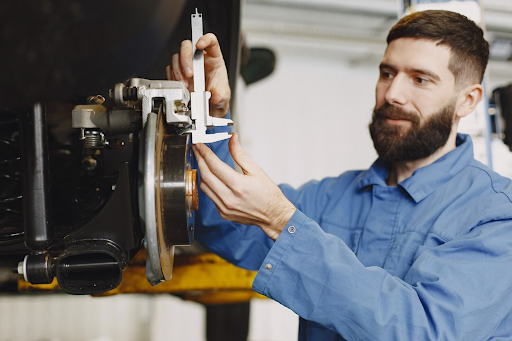
In the present time, one of the common challenges everyone faces because of machinists is tool deflection. This phenomenon can lead to dimensional inaccuracies, tool breakages, and poor surface finishes.
CNC tuning parting off issues plague machine shops everywhere, from small jobs to major manufacturing facilities. However, the best part is that most parting tool failures are preventable once you understand the main reason and apply proven solutions.
Causes of tool breakage in machining
Here are the major reasons for tool breakage in machining :
- High Cutting Forces
High cutting forces are another major cause of tool breakage, and they kind of keep creeping up when you make aggressive machining choices, like setting a large depth of cut or going with a higher feed rate. But once you keep pushing those parameters, machining efficiency can look better, even so it also adds extra loading on the tool, and then it might deflect, particularly if the tool itself, or the machine setup, can not handle that strain very well.
- Mitigation strategies: to reduce the damage from very high cutting forces, you should try to get a better balance between the machining parameters and do it more carefully.
- Impact on machining: when cutting forces get too high, the tool may flex, or start vibrating, and that results in worse dimensional accuracy, plus a rougher surface appearance. Also, the elevated force level speeds up tool wear and shortens overall tool life.
- Tool Material and Geometry
The geometry and the material of the tool itself are kinda key in how easily it can get deflected. When tools are made from softer substances, like high-speed steel (HSS), they tend to merge more readily with harder materials such as carbide end mills. Also, if the tool has a thin or delicate layout, for instance, small diameters, or a long, slender kind of profile, then it is more likely to crack or fail due to the applied pressure.
- Long Tool Overhang
One of the big reasons for tool breakage is tool overhang, which is kind of a situation where the cutting tool extends away from the holder. When it sticks out too far, it becomes way easier to shift, especially because machining forces are not exactly gentle. So it kind of follows the leverage principle— the farther the extension goes, the longer the lever arm gets, and that then boosts the bending moment that acts on the tool.
- Mitigation Strategies: To reduce breakage caused by overhang, use the shortest feasible tool length for the job. Also, improving the setup so the extension is smaller can really help with machining precision, more like tighter control overall.
- Influence on Machining: With a longer overhang, even modest cutting forces can trigger noticeable breakage. that usually shows up as inaccuracies across the machining cycle. The tool may also wander out of its intended route, so the finished components end up with dimensions that don’t satisfy the strict tolerance requirements, no matter how careful the operator is.
- Inadequate Tool Support
The rigidity of the tool holder and the machine spindle is pretty much crucial in stopping tool breakage. If there is any lack of support, or even a bit of looseness, in the tool handling setup, it can cause more deflection than you expect. With a tool that is not properly supported, it can end up shifting or even vibrating under the cutting forces, and then it starts to drift off from the path you really wanted.
- Mitigation Strategies: Making sure everything is rigid is basically the key to less breakage. Using top-notch quality tool holders helps because you get solid clamping, and then make sure you do frequent checking of the machine spindle for wear and tear, it really helps keep that important rigidity under control.
- Influence on Machining: If support is inadequate, the tool may act in a less predictable way, and that usually turns into dimensional inaccuracies, plus an overall drop in the quality of the machined part. Also, it can trigger chatter, and that will mess with the surface finish, while also shortening the tool life.
Common mistakes leading to tool damage
Here are the common mistakes leading to tool damage:
- Ignoring Maintenance: Lubricate, failing to clean or sharpen tools results in poor performance and broken parts.
- Using Incorrect Tools: Using tools for tasks that are not designed, such as using pliers on hardened steel or a screwdriver as a pry bar, is a main reason for damage.
- Using dull blades / bits: Dull CNC cutting tools need more force, enhancing heat and stress on both the tool and the workpiece.
- Dirty work environments: Enabling dust and debris to create inside motors and on moving parts causes overheating and premature wear.
- Improper Storage: Keeping tools in damp or dirty environments leads to rust and corrosion.
- Avoiding Proper Settings: Failing to adjust torque settings, blade angles or depth stops can break parts and ruin materials.
Proper setup for safer machining
Properly setting up for safe machining needs a secure workholding, wearing accurate
Properly setting up a machine for a secure operation includes wearing accurate PPE (no gloves/loose clothing), ensuring the workpiece is securely rigid, verifying tool sharpness, and checking that all guards are at one place. Always eliminate chunk keys, verify speed rates and operate a simulation or dry run to ignore.
Here are points for operator safety practices :
- Inspect with glasses on.
- Wear your PPE.
- Tie back long hair
- Wear proper footwear
- Pass tools carefully
- Stay back while the machine is running
- Shut down and clean up
Feed and speed impact on tool safety
CNC machining tools play a prominent role in several manufacturers' processes. However, they are also a major cost centre and can be a bottleneck when it comes to getting the product instantly via the plant. Far too often we find that an organisation has invested in quality inserts and tooling, however is not running them at the proper feeds and speeds.
Here we will understand individually about each feed and cutting speed -
Feed
- Feed rate is the velocity at which the cutter is moved along the spinning workpiece. The units are basically distance per spindle revolution.
- Cut speed ( or surface speed) is the speed at the outside edge of the part as it rotates. It has been shown as a unit of distance along the workpiece surface per unit of time.
Cutting Speed
Cutting speed is the speed at which the material revolves past the cutting edge of the tool. It is known as revolutions per minute ( RPM) or as surface feet per minute (SFM). The (RPM) revolutions per minute relates directly to the speed, or velocity of the spindle. It showcases the no of turns accomplished in one minute around a fixed axis. RPM manages similar revolutions per minute throughout the whole operation.
Practical steps to extend tool life
A tool's life can be significantly expanded by reviewing machine conditions, opting for the correct tools and implementing impactful, frequent management practices.
Here, we introduce five practice tips that can be implemented on the shop floor.
- Select the right tool material and coating
The material and coating of a tool have a crucial impact on its lifespan. When you're machining harder materials, opting for a tool with a high wear resistance or a coating that can withstand heat helps prevent excessive wear and extend tool life.
- Review Machining Conditions
If your cutting speed, feed rate or depth of cut isn’t established accurately, the tool is placed under excessive load, and so its lifespan becomes shorter. By optimising and reviewing your machining conditions, you can slow down tool wear and make your tools last longer. Most importantly, you can adjust these conditions to match the hardness and shape of the material you're machining.
- Check the condition of the machine and tool holders
The condition of the tool, the machine and even the tool holders can become loose, vibration can happen during machining, putting less important stress on the tool. By analysing machine correctness on a frequent basis, make sure your tool holders are tightened and not worn out. You can minimise a stable setup and help your tools perform at their best.
- Optimise the use of cutting oil
Cutting fluids aid in lubricating and cooling the tool. By opting for the accurate fluid and the right method of delivery, you can minimise friction and heat generation, which in turn assists in minimising tool wear. Using an approach that meets your machining method, such as mist cooling or high-pressure supply, which significantly expands the life of the tool.
- Perform regular inspections and keep accurate records
Frequent checking of the condition of your tools and keeping a record of their usage helps you understand their wear pattern and complete lifespan. By analysing how much a tool wears during each machining operation and when it was replaced, you can make tool management much simpler the next time.
Conclusion
The life of a tool plays a prime role that directly influences quality, efficiency, and cost on the production floor. By analysing tool life and measuring and extending it through the right strategies, manufacturers can minimise unnecessary tool changes and achieve more stable, impactful production. Adopting a customised approach based on specific industry and machining requirements makes tool life management even more effective, especially when using high-performance tooling solutions from CGS Tool.
Effective tool life management often begins with small improvements in routine operations, and those incremental changes can lead to significant results. Start by reviewing your current tool life practices and identifying areas where improvements can be implemented today.