
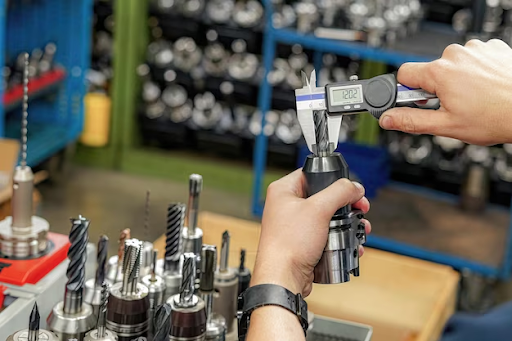
The tool you end up selecting for CNC machining tools really matters, it plays a huge part in how fast your parts get done and how good they come out. Picking a tool isn’t just about machining speed though, it also steers the final quality of the product.
The right tools can boost productivity, give you better accuracy and cut down costs. Meanwhile the wrong choices can cause delays , give you poor surface finishing, and end up wasting materials. In this post we’ll dig into how the role of the right tool affects machining speed and also the surface finish .
Tool selection and its impact on performance
Tool selection directly dictates operational efficiency, output quality, and overall costs. Using accurate instruments such as high performance end mills decreases errors, accelerates execution, and extends equipment lifespan. Conversely, mismatched tools can cause premature wear, expensive rework, and production bottlenecks.
The influence of Tool Selection on Performance
Choosing the right tool for a certain task whether in manufacturing, engineering or software enhances various significant performance metrics:
1. Cycle time & productivity
- Tools that are well suited to the task require less stress and less placement. Downtime Reduction:
- Speed With the right tool geometry and compatible materials, you can run at higher speeds and feeds.
- Automation. Advanced tooling allows easy integration with automation software, allowing frequent unattended service.
2. Efficiency Economic
- Rework Costs Finding errors prevents scrap, and it takes away the labour hours to fix errors.
- Consumables Spend: Reduce the total cost per part by reducing breakage and wear.
3. Precision and Quality
- Accuracy: Tooling for tasks provides better dimensional tolerances and less error.
- Finish: Proper selection of tools such as the use of some PCD rather than carbide tools gives better surface finishes and reduces secondary processing.
Tool design and surface finish quality
Tool design generally determines surface finish quality in machining and manufacturing. CNC cutting tools geometry such as (nose radius, rake angles and edge preparations) tool rigidity and materials directly influences cutting forces, chip evacuation and vibrations. Now by optimizing these factors lowers defects and obtains the desired texture.
Significant Elements of Tool Design
- Rake Angle : Positive rake angles eliminates cutting forces and shearing friction, yielding a cleaner surface. Negative rake angles are stronger however enhance friction and heat, potentially degrading surface integrity.
- Edge Preparation : Rounding or rounding the cutting edge secures micro - chipping and creates a frequent shear plane which lowers tearing on the workpiece.
- Nose Radius : A massive nose radius lowers the theoretical surface roughness by flattening the ridges left by the tool. But, excessively large radii can induce vibration (chatter).
- Tool Rigidity : Stiff tooling systems ( e.g solid carbide bars) resist deflection and lowers chatter. Deflection causes inconsistent cut depths, leaving visible waves and tool marks.
Surface Finish
Engineers measure surface finish by utilising certain parameters to ensure parts meet functional and aesthetics fulfillments.
- Rz ( Mean Roughness Depth) : The average distance between the five highest peaks and five lowest valleys. This identifies the most important flaws on the surface.
- Ra (Roughness Averages) The arithmetic average of the heights and depths of surface irregularities. This is the global standard for specifying surface texture.
- Lay : The direction of the dominant surface pattern, which is directly dictated by the tool path and tool design.
Achieving higher speed without tool damage
Obtaining higher speeds without causing tool damage requires optimizing your speeds and feeds, lowering heat buildup and elevating tool rigidity. The primary reason for tool wear is excessive friction and thermal stress which can be mitigated through proper machining parameters, tooling choices and coolant.
Top Strategies for Higher Speeds Without tool Damage
Here are the prominent strategies for higher speeds without tool damage.
- Optimize Chip Evacuation : High speeds instantly lead to ‘chip welding’ (built up edge) if chips are not cleared immediately. Use complete flood coolant or high -pressure air blast to keep the cutter cool and quickly evacuate chips from the cut zone.
- Adopt Adaptive Toolpaths : High speed machining (HSM) depends on a constant engagement angle (often 10% to 30% stepover ).This keeps the radial depth low, which causes chip thinning. The reason why the chip is physically thinner than the programmed feed rate, you can push the feed much higher without overloading the cutting edge.
- Balance Surface Speed vs. Chip Load : If your tool gets heated, do not reduce the feed rate, which causes rubbing and dulling. Instead, remove the spindle speed ( surface feet per minute) while maintaining your designated chip load.
- Eliminate Runout : Ensure your toolholders and collects are precisely balanced, especially above 10,000 RPM. Eccentric rotation puts excessive, localised stress on a single flute, leading to premature chipping.
Balance between speed, accuracy, and tool life
Tool life is known as the span or number of cycles you can use a tool prior you need to replace it. As it directly influences machining accuracy and product quality, the reason why it is important to understand correctly.
Since you frequently use the tool, the cutting performance gradually deteriorates which causes dimensional inaccuracies or rough surface finishes. These changes clearly showcase that you need to replace the tool. By accurately identifying the end of a tool's life,a manufacturer can ignore unnecessary replacements and manage frequent product quality.
And balancing speed, accuracy and tool life in machining is the classic ‘pick two’ compromise. Prioritising tool life means slowing down, which lowers throughout. The motive is to find the ‘sweet spot’ that lowers the total cost per part.
Small changes with noticeable results
Optimising speed of machines and surface finishes requires making tiny, high -impact changes to your tooling. By changing dull cutters for sharp carbide, increasing spindle speeds and decreasing tool overhang, cutting temperatures and material deflection can be greatly reduced, making showcase quality parts in less time.
Conclusion
The coatings of metal cutting tools have become a very important part of modern machining and have provided an unprecedented improvement in machining speed and surface finish. Coatings increase wear resistance, reduce friction, and provide superior heat management, allowing machinists to maximize efficiency without sacrificing quality. As industries continue to demand higher precision and faster production, cutting tool coatings from CGS Tool will continue to play an important role in helping manufacturers achieve these goals.